
NHS England’s February 2026 figures: median RTT wait of 13.2 weeks. 61.5% of patients waiting over 18 weeks. 447,100 people waiting more than six weeks for key diagnostics.
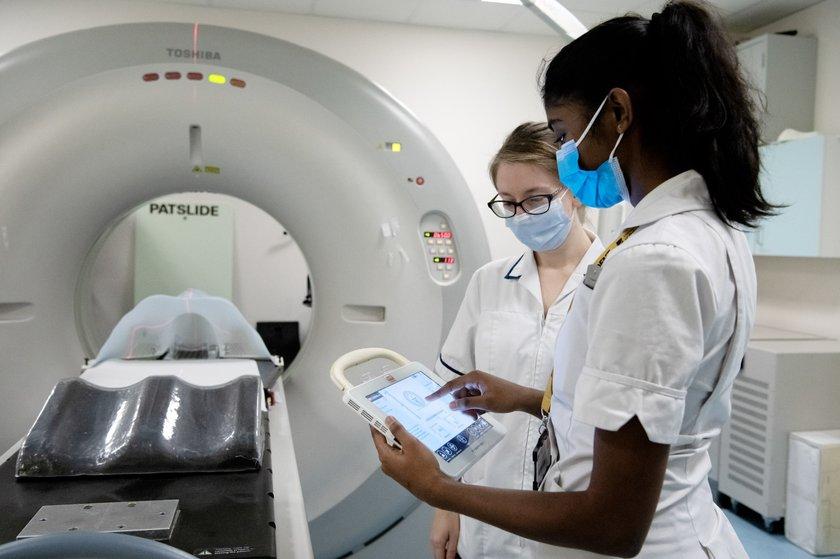
The elective backlog has improved from its worst point. It hasn’t gone away. And it continues to drive sustained hiring pressure in specific parts of the workforce — theatres, imaging, radiography, sonography, outpatient flow, ward discharge capacity.
Aggregate vacancy rates are down. But the services where vacancies have the highest operational consequence — throughput-critical specialties tied directly to backlog reduction — remain under significant pressure. The overall figure flatters the picture.
The NHS cannot clear the backlog without the clinical workforce to deliver the activity. And the roles most critical to that — theatre practitioners, diagnostic radiographers, sonographers — are among the hardest to grow quickly. Training pipelines are long. Domestic supply is constrained.
International recruitment has historically partially compensated for this. But with visa applications down 51% year-on-year and arrivals down 93% over three years, that channel is operating at a fraction of its 2022–2023 volume. Whether that gap is being filled by other means, or showing up as slower backlog reduction, the aggregate statistics don’t say.
Workforce pressure in 2026 is geographically and specialty specific. A trust with strong diagnostic capacity is in a very different position to one still running on agency radiographers. The national picture is context. The local picture is where the actual problem — or advantage — sits.